Nov. 12, 2026
A Bathroom with Custom Mosaic Art for spa-style interiors combines a practical wet-room layout with a carefully planned artistic focal point. In my experience, the strongest results come from matching the mosaic’s placement, material, palette, lighting, and maintenance requirements before production begins. Custom Mosaic Art can create a calm visual rhythm through water motifs, botanical forms, soft neutrals, reflective glass, or hand-cut stone, but it must be planned as part of the complete bathroom rather than added as an isolated decoration.
Custom mosaic art creates a spa-style bathroom by placing a controlled artistic feature within a moisture-ready design. The most effective projects usually combine one focal surface, a restrained palette, suitable glass or stone, waterproof preparation, compatible grout, and lighting that reveals texture without excessive reflection.
!
Custom mosaic art for bathrooms is a made-to-order composition designed around a specific wall, niche, backsplash, shower, tub surround, or feature panel. Instead of selecting a standard repeat pattern, I would define the subject, dimensions, tessera size, materials, palette, and visual scale for the actual room. The artwork may be created from an original drawing, a photograph, a geometric concept, a botanical reference, or a simplified water motif.
The main distinction between custom mosaic art and standard bathroom tile is the level of design control. Standard tile is usually selected by format, color, and finish, while a custom mosaic may be adjusted around plumbing controls, windows, niches, mirrors, corners, and architectural proportions. That flexibility increases design and fabrication work, so the project should be priced and scheduled as both a surface material and an artwork commission.
I recommend starting with the bathroom layout rather than the image. Mark the shower enclosure, tub, vanity, toilet, door swing, windows, lighting, niches, and plumbing fixtures on an elevation drawing. Then select one primary focal area and keep the surrounding surfaces quieter so the artwork remains legible.
A small bathroom often benefits from a narrow vertical panel behind the vanity or inside a recessed niche. A master bathroom can accommodate a wider feature wall behind a freestanding tub, while a hotel or wellness project may use a coordinated composition across several elevations. For residential bathroom renovations, I generally prefer one major focal surface and one smaller repeated detail instead of mosaic on every wall.
A custom shower wall can become the main visual feature, especially when the artwork uses flowing lines, soft blue-green gradients, waves, shells, reeds, or abstract botanical forms. However, a decorative wall mosaic and a fully wet-rated shower installation are not automatically the same product. I would confirm that the selected tile, mesh backing, adhesive, grout, waterproofing assembly, and maintenance method are suitable for direct and repeated water exposure.
Shower controls and niches should be included in the artwork elevation before cutting begins. Important faces, eyes, flowers, or central pattern elements should not disappear behind fixtures or be divided awkwardly at corners. Smaller tesserae can follow curves and accommodate penetrations, but they also increase grout length and cleaning effort.
Niches are useful for compact custom mosaic bathroom ideas because they introduce color and detail without covering a full wall. A small wave pattern, leaf motif, or geometric border can make the niche feel intentional while the main wall remains finished in large-format stone, porcelain, or plaster-compatible tile. Because the area is limited, the artwork should use a simplified pattern with enough contrast to remain visible under bathroom lighting.
Vanity backsplashes are often the most practical location for decorative custom bathroom tile murals. They are usually exposed to splashes rather than constant shower spray, provide a clear viewing distance, and can be framed by the mirror, sconces, cabinetry, and countertop. I would still specify moisture-resistant setting materials and grout, especially around faucet penetrations and the sink edge.
A tub wall can support a wider horizontal composition, particularly in a master bathroom or hotel suite where the bathtub is viewed from several angles. Nature or water motifs work well because their horizontal movement echoes the shape of the tub and can connect the bathing area with the floor, window, or exterior view. The design should not compete with a heavily veined stone slab, ornate metalwork, or a high-contrast floor.
A feature wall outside the direct wet zone offers greater freedom in material selection and maintenance. This is often the appropriate choice for delicate hand-cut stone, metallic glass accents, or a detailed portrait-style composition that would be unnecessarily exposed to soap, shampoo, and constant water. In this application, the mosaic functions more like luxury bathroom wall art than a shower lining.
A spa-style bathroom usually depends more on visual restraint than on the number of decorative materials. I look for a palette of two to four dominant tones, such as mist blue, warm white, pale gray, sage, sand, or muted teal. A small amount of deeper navy, charcoal, bronze, or green can define the artwork, but too many saturated colors may make a compact bathroom feel visually busy.
Water motifs include ripples, flowing lines, pebbles, shells, fish, reeds, and abstract gradients. Nature motifs may include palms, ferns, branches, flowers, mountains, or clouds. For a contemporary bathroom, I would often simplify these subjects into broad shapes rather than reproduce every detail, because large visual masses remain clearer from across the room.
Reflective materials can support the feeling of water, but reflection must be balanced against lighting and mirror surfaces. Glossy glass can amplify sconces, daylight, and concealed LED strips, while polished marble can introduce veining and depth without the same level of sparkle. Matte surrounding tiles, brushed metal fixtures, and controlled grout contrast can prevent the room from appearing overactive.
The material decision should be based on location, water exposure, cleaning habits, slip requirements, and the intended visual effect. Glass, marble, porcelain, ceramic, and mixed-material mosaics can all serve different purposes, but no material should be selected only because it looks attractive in a sample photograph.
Glass is useful when I want translucent color, strong light reflection, or a clean contemporary finish. It can suit shower walls, vanity areas, and feature panels when the selected product and complete installation assembly are approved for that application. Glass is generally nonporous, but the joints, edges, backing, adhesive, and surrounding substrate still require correct detailing.
For floors, smooth polished glass may create a slip concern when wet. I would use a product specifically rated for floors and confirm its wet-area slip characteristics rather than assuming that a small tile format automatically provides sufficient traction. Textured or matte finishes can reduce reflection and provide a more suitable walking surface.
Natural stone mosaics offer variation in tone, texture, and veining that can make a spa-style bathroom feel quieter and more architectural. Marble is well suited to feature walls, tub surrounds, vanity backsplashes, and decorative niches when the owner accepts periodic sealing and careful cleaning. Acidic cleaners, abrasive powders, and harsh chemicals can etch or dull many natural stones.
Stone also varies from piece to piece, so I would request samples or a control board before approving production. The sample should show the actual range of color, veining, finish, grout, and lighting response. For wet areas, the installer should confirm that the stone, sealer, adhesive, and substrate are compatible with the manufacturer’s requirements.
Mosaic creates more joint length than large-format tile, which directly affects cleaning and maintenance. I would choose grout color carefully: a close tonal match reduces visual noise, while a strong contrast emphasizes every tessera and joint. Epoxy grout can be considered where stain resistance and frequent cleaning are priorities, although the installer must be experienced with its application and cleanup.
Natural stone usually requires a compatible sealer, and some installations may need resealing according to the stone and product instructions. Routine cleaning should use a soft cloth or nonabrasive sponge with a pH-neutral cleaner approved for the material. I would avoid bleach-heavy, acidic, abrasive, or solvent-based products unless the tile and grout manufacturers specifically permit them.
Supplier scope, pricing, installation support, and design workflow vary considerably. The ranges below are indicative planning figures rather than fixed quotations, because size, artwork complexity, material, shipping, mounting method, and site preparation can change the final amount.
| Supplier | Main service scope | Customization process | Installation support | Indicative pricing |
|---|---|---|---|---|
| Casa Bezier | Custom bathroom solutions, mosaic art, ceramic and glass options, OEM/ODM, design planning | Submit dimensions, references, colors, and artwork requirements; design review precedes production | Coordinates product planning; installer confirmation remains necessary | Quote-based; allow additional budget for shipping, site preparation, and installation |
| Allison Eden Studios | Handcrafted glass mosaic bathroom and shower artwork | Brief, dimensions, palette, architectural details, design development, and fabrication | Installation responsibilities are coordinated with the project team | Often quote-based; published project references show approximately $1,000–$5,000 for many custom jobs |
| iMosaicArt | Custom marble and glass mosaics, catalog modifications, original commissions | Submit photo, sketch, dimensions, material, and palette; design consultation and tailored quote | Provides installation guidance; installation is generally separate | Approximately $770 for a small 24-by-20-inch piece, $1,100–$1,500 for many 3-by-3 to 3-by-4-foot works, and $4,000–$6,300 for larger mural pieces |
| MEC Artworks | Bespoke mosaic design, concept renders, material selection, fabrication, global delivery | Review concept renders, refine colors and composition, approve budget, then fabricate | Ships mapped, installation-ready sections with layout guidance | Quote-based; project scope and materials determine the final figure |
| Budget Mosaics | Custom wall art, bathroom walls, backsplashes, floors, pools, and architectural work | Provide dimensions, preferred materials, colors, style, and source artwork | Installation instructions and recommendations; professional installation is generally arranged separately | Quote-based; complexity, size, materials, mounting, packaging, and shipping affect cost |
| The Tile Shop | Standard mosaic and bathroom tile supply for surrounding surfaces and accents | Primarily product selection rather than fully bespoke artwork commissioning | Local availability and installation options vary by market | Retail pricing varies by collection, format, and region; useful as a benchmark for standard tile costs |
Casa Bezier is especially relevant when the project requires a coordinated bathroom product plan alongside custom mosaic art. Allison Eden Studios and MEC Artworks are more focused on bespoke artistic development, while iMosaicArt provides published size-based reference pricing that can help establish an early budget. Budget Mosaics can suit buyers comparing made-to-order options, and The Tile Shop is useful when the mosaic must be paired with readily sourced field tile.
Before commissioning a design, I would prepare a project file containing wall elevations, exact dimensions, photographs, fixture locations, niche sizes, lighting positions, plumbing penetrations, and the preferred installation date. Measurements should be taken after the substrate dimensions are confirmed, because framing, waterproofing layers, backer board, mortar thickness, and trim can alter the finished surface. Artwork should be scaled to the actual visible field rather than the rough opening.
Waterproofing must be completed before tile installation in shower areas and other direct wet zones. The substrate should be flat, stable, clean, and appropriate for the selected tile and setting system. The tile installer, designer, and mosaic supplier should confirm who is responsible for cutting, layout mapping, edge treatment, movement joints, grout selection, sealing, and final inspection.
Lead times vary by supplier and complexity. Casa Bezier states that standard made-to-order products may require approximately 30–35 days, while custom changes may require about 45 days, including design and production stages. Allison Eden Studios identifies approximately four weeks for regular custom glass projects, while natural stone projects may require about twelve weeks, so I would build in time for approvals, shipping, inspection, and installer scheduling.
The installer should receive numbered sections, orientation drawings, grout instructions, and any required material samples. Before setting begins, the artwork should be dry-laid or reviewed against the approved elevation so that pattern direction, color distribution, fixture openings, and border alignment can be checked. A final inspection should confirm bonded tiles, consistent joints, sealed edges, clean transitions, and adequate drainage where applicable.
Custom mosaic bathroom art can range from under $1,000 for a small decorative panel to several thousand dollars for a large handmade mural, with installation and preparation priced separately in many cases. Size, tessera density, design detail, material, mounting system, packaging, shipping, waterproofing, and labor all affect the total. A simple geometric backsplash and a photo-realistic shower mural of the same area may have very different fabrication costs.
For budgeting, I would separate the project into five categories: artwork and materials, design revisions, shipping and crating, substrate and waterproofing, and installation. Handmade wall artwork may commonly fall near $90–$230 per square foot based on published size-based examples, while installed custom mural or shower-feature work can reach approximately $180–$250 per square foot in some specialist commission models. These figures should be treated as planning references, not universal rates.
I consider custom mosaic art a sensible investment when the bathroom has a clear focal surface, the owner expects to remain in the property long enough to enjoy the design, and the installation budget includes professional preparation. It is less suitable when the room is likely to be remodeled soon, when the owner wants the lowest-maintenance surface possible, or when the artwork would be exposed to constant water without a verified wet-area system.
The strongest value usually comes from a controlled application rather than maximum coverage. A 6-to-20-square-foot vanity backsplash, niche composition, or tub-wall panel can deliver a distinct visual identity while limiting grout, installation labor, and replacement risk. For a rental property or frequently changing commercial interior, a removable or decorative wall-mounted panel may be more practical than a fully integrated shower mural.
I would use the following decision framework before requesting quotations:
| Project priority | Recommended direction | Reason |
|---|---|---|
| Compact bathroom focal point | Vanity backsplash or niche | Controls cost and limits grout maintenance |
| Direct shower exposure | Approved glass, porcelain, or stone system | Requires verified waterproofing and wet-area compatibility |
| Soft, natural spa mood | Sage, sand, mist blue, marble, botanical forms | Creates visual calm with moderate contrast |
| Strong contemporary statement | Reflective glass and abstract geometry | Works with controlled lighting and simple surrounding surfaces |
| Low maintenance | Larger tesserae, tonal grout, decorative wall placement | Reduces joint length and cleaning effort |
| Highly personal artwork | Original photo, sketch, or custom illustration | Supports a design tied to the owner or property |
| Coordinated bathroom renovation | Full-service bathroom supplier | Helps align mosaic, fixtures, surfaces, and drawings |
| Budget-sensitive project | Existing design with color or size modifications | Reduces design development and fabrication complexity |
I would also ask every supplier whether the quoted price includes design revisions, samples, layout mapping, edge finishing, mounting, packaging, shipping, insurance, and installation guidance. A low material price may not represent a low project cost if the installer must resolve missing elevations, uneven substrates, or unnumbered mosaic sections on site.
A Bathroom with Custom Mosaic Art for spa-style interiors works best when art, architecture, and technical performance are planned together. I would select the placement first, distinguish decorative wall art from a fully wet-rated shower installation, then confirm the material, palette, grout, sealing, lighting, and maintenance requirements. A restrained water or nature motif on one focal surface is usually more effective than covering every wall with detailed mosaic.
Casa Bezier, Allison Eden Studios, iMosaicArt, MEC Artworks, Budget Mosaics, and The Tile Shop serve different project needs, from coordinated bathroom sourcing and bespoke commissions to standard field tile supply. Before ordering, I would prepare accurate elevations, confirm waterproofing and substrate conditions, request material samples, obtain a complete quotation, and reserve adequate time for design approval, fabrication, shipping, and installation. With that preparation, custom mosaic art can provide a durable and visually controlled focal point for residential bathrooms, luxury renovations, wellness interiors, and hospitality projects.
None
LATEST NEWS
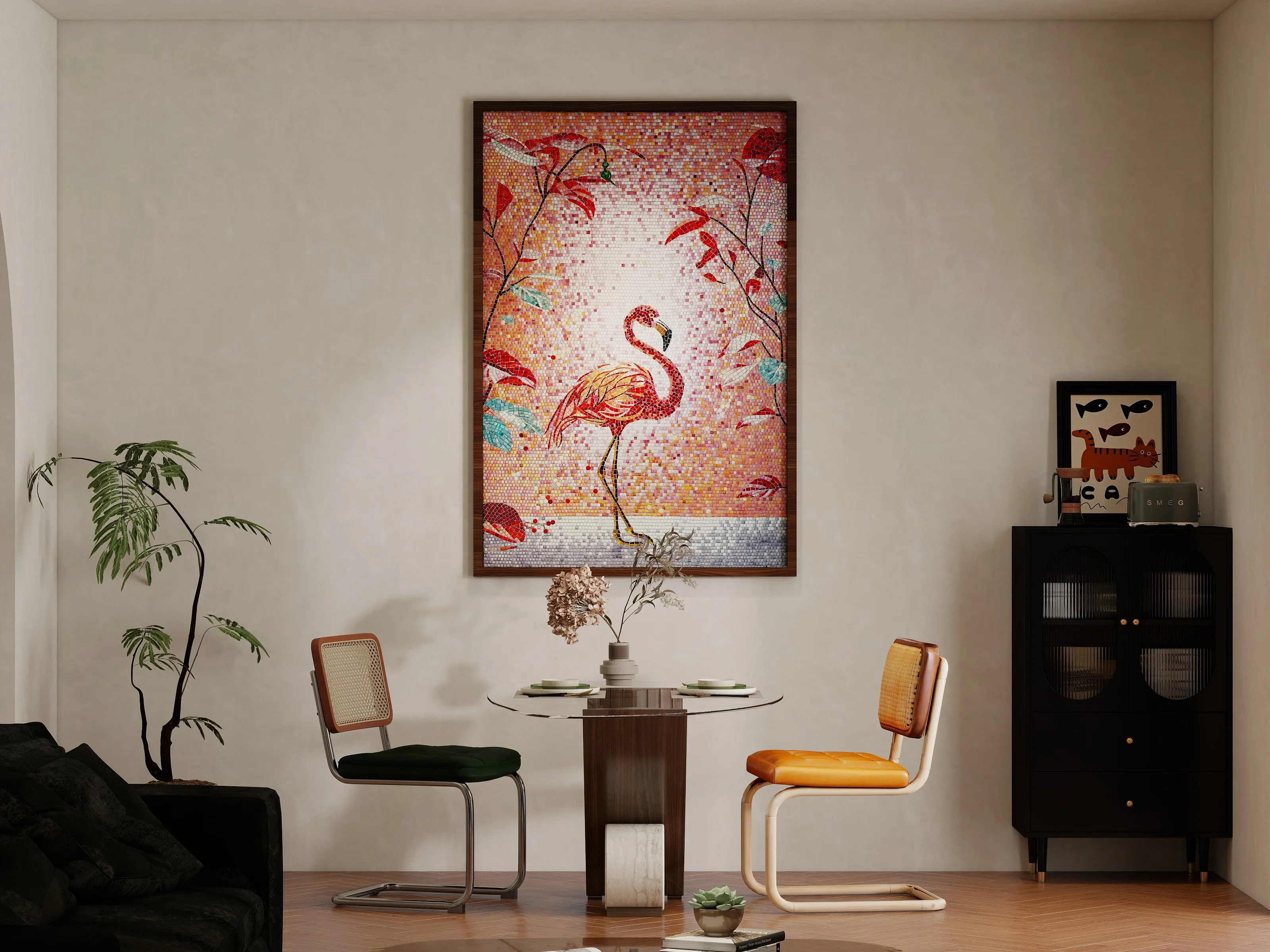
Bathroom with Custom Mosaic Art for spa-style interiors
Nov. 12, 2026


Product Categories
Related products


Golden Rhapsody centers on the visual essence of a woman poised like a dancer, capturing her posture and emotion in the fleeting moment of rotation. This design transcends mere aesthetic representation, embodying a fluid poetic spirit—a visual sonata where light, shadow, and form dance in unison. Its core philosophy is rooted in the dual themes of “vitality in rhythm” and “the radiance of womanhood.”


Contact Us
+86 137 9407 5073
Unit 113-120, Building 4, Hello ZhiGu Industrial Park,Foshan City,Guangdong Province,China
Navigation
Navigation
Solutions
Solutions
Request An Quote
Request An Quote


